Nighthawk Setup for Smart Homes: Optimize WiFi for 30+ Devices Without Lag
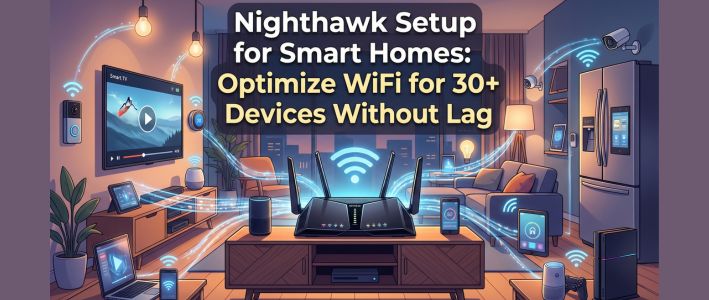
Smart homes in 2026 are more connected than ever. From smart TVs and security cameras to voice assistants and gaming consoles, it’s common for households to run 30+ devices at once. But without proper configuration, even a powerful router can struggle-leading to lag, buffering, and disconnects.
If you’re using a Netgear Nighthawk router, the right netgear nighthawk setup can handle heavy device loads smoothly. With smart optimization and tools like the download nighthawk app, you can ensure fast, stable WiFi across your entire home.
Let’s break down how to do it right.
Why Smart Homes Need Optimized Setup
Modern devices constantly consume bandwidth-even in the background.
Common Connected Devices:
- Smart TVs and streaming devices
- Smartphones and tablets
- Laptops and desktops
- Security cameras
- Smart speakers
- Gaming consoles
- Smart appliances
Without optimization, these devices compete for bandwidth, causing slow speeds and lag.
Start with Proper Netgear Nighthawk Setup
A strong foundation is key.
Basic Steps:
- Connect router to modem
- Power on and wait for stable lights
- Connect device to WiFi
- Access setup via browser or download nighthawk app
- Complete configuration
Using the app simplifies setup and reduces errors.
1. Use the Nighthawk App for Easy Management
The download nighthawk app gives you full control over your network.
Benefits:
- Monitor connected devices
- Run speed tests
- Pause devices
- Update firmware
- Manage WiFi settings
It’s the easiest way to handle a smart home network.
2. Choose the Right WiFi Bands
Most Nighthawk routers offer dual-band or tri-band support.
Use Bands Smartly:
- 2.4GHz → Smart devices, cameras, IoT devices
- 5GHz → Phones, laptops, streamin
- 6GHz (if available) → Gaming and high-speed tasks
This prevents congestion and improves performance.
3. Enable Smart Connect
Smart Connect automatically assigns devices to the best band.
Why It Helps:
- Balances network load
- Reduces manual switching
- Improves stability
You can enable it during netgear nighthawk setup.
4. Optimize Router Placement
Placement directly impacts performance.
Best Position:
- Central location in home
- Elevated position
- Away from walls and metal objects
Avoid:
- Corners
- Basements
- Behind furniture
Good placement ensures even coverage for all devices.
5. Update Firmware Regularly
Firmware updates improve performance and security.
Steps:
- Open download nighthawk app
- Check for updates
- Install latest firmware
Outdated firmware can cause lag and connectivity issues.
6. Limit Device Overload
Even powerful routers have limits.
Tips:
- Disconnect unused devices
- Schedule device usage if needed
- Prioritize important devices
7. Use Quality of Service (QoS)
QoS lets you prioritize bandwidth for specific devices.
Example:
- Gaming console → High priority
- Work laptop → High priority
- Smart lights → Low priority
This ensures critical tasks stay smooth.
8. Create Guest Network
Separate your main network from guest devices.
Benefits:
- Improves security
- Reduces congestion
- Keeps main network faster
9. Consider Mesh Expansion
For large homes, one router may not be enough.
Solution:
- Add mesh extenders or satellites
- Expand coverage to all rooms
This prevents dead zones and improves signal strength.
10. Reduce Interference
WiFi signals can be disrupted by:
- Microwaves
- Bluetooth devices
- Thick walls
- Other networks
Fix:
- Change WiFi channel
- Keep router away from electronics
Monitor Your Network Performance
Use the download nighthawk app to:
- Check device usage
- Run speed tests
- Identify slow devices
- Monitor network health
Common Mistakes to Avoid
- Placing router in corner
- Connecting all devices to one band
- Ignoring firmware updates
- Overloading network
- Using outdated router
Pro Tips for 2026 Smart Homes
- Upgrade to WiFi 6 or WiFi 7 Router: Better handling of multiple devices.
- Use Ethernet for Heavy Devices: Gaming consoles and TVs perform better wired.
- Restart Router Weekly: Prevents slowdowns.
- Secure Your Network: Use strong passwords and encryption.
When to Upgrade Your Router
Consider upgrading if:
- Frequent lag or buffering
- Many devices disconnect
- Speeds remain slow despite optimization
- Router is outdated
Final Thoughts
Managing 30+ devices doesn’t have to mean slow internet. With the right netgear nighthawk setup, smart placement, and tools like the download nighthawk app, your network can handle heavy usage without lag.
Focus on band management, firmware updates, device prioritization, and proper placement to get the best performance.
A well-optimized smart home network isn’t just faster—it’s more reliable, stable, and ready for the future.
Tags: Netgear Nighthawk setup